
Canada is an attractive market for Pakistani rice, fresh produce and home textiles, but the rules a Canadian importer must follow come from several agencies: the Canada Border Services Agency (CBSA) for customs, the Canadian Food Inspection Agency (CFIA) for food and plants, and the Competition Bureau and Health Canada for consumer textiles. This guide brings the main requirements together for business buyers.
It is general guidance, current to the sources cited when they were checked in October 2026. Requirements depend on the exact product, its tariff classification and your business, so confirm them with the CBSA, the CFIA or a licensed customs broker before you import.
Step 1: Register as an Importer and Set Up CARM
To import commercial goods into Canada you need a business number and an import/export (RM) program account. Since October 2024, most resident businesses can obtain both in the CARM Client Portal. Non-resident importers obtain their business number from the Canada Revenue Agency.
CARM (the CBSA Assessment and Revenue Management system) is now the official system of record for duties and taxes. In practice this means:
- Register in the CARM Client Portal. A business account manager registers the business; the CBSA recommends having at least two.
- Delegate authority to your customs broker in the portal if you use one. Without the delegation, the broker cannot file declarations for you.
- Decide whether you need Release Prior to Payment. To have goods released before paying duties and taxes, you must post financial security. A security bond must cover at least 50% of your highest monthly amount owing in the previous 12 months, with a minimum of C$5,000; a cash deposit must cover 100%.
Goods are now accounted for using the Commercial Accounting Declaration (CAD), which replaced the old B3 form.
Step 2: Classify the Goods and Check the Tariff
Every product must be classified under the Customs Tariff. The classification determines the duty rate, which preferential treatments are available and which other agencies’ rules apply. Ask your supplier for the Harmonized System (HS) code they will declare on export, but treat it as a starting point: the Canadian tariff item is your responsibility.
Two examples from the 2026 Customs Tariff illustrate how much the result can vary:
| Product | Tariff heading | MFN rate (2026) | GPT |
|---|---|---|---|
| Rice | 1006.10–1006.40 | Free | Not needed at a Free MFN rate |
| Cotton terry towels | 6302.60.00 | 17% | No GPT rate listed |
Rates read from the CBSA’s 2026 Customs Tariff in October 2026. Rates change; always confirm the current rate for your exact tariff item.
Step 3: Understand Whether GPT Applies
Pakistan is eligible for Canada’s General Preferential Tariff (GPT) as well as the Most-Favoured-Nation (MFN) rate. The GPT programme has been extended to 31 December 2034, but it excludes apparel, footwear, certain textiles and sensitive agricultural products. In practice, many home textiles will pay the MFN rate.
Where a GPT rate is available and lower, the goods must meet the GPT rules of origin:
- At least 60% of the ex-factory price must originate in GPT beneficiary countries or Canada.
- The goods must be shipped directly to Canada, with a through bill of lading if requested.
- The exporter provides a Form A or an Exporter’s Statement of Origin referencing the invoice. It does not need to be certified by an authority.
- The importer claims GPT on the declaration and must be able to produce the proof of origin if the CBSA asks for it.
If you intend to claim GPT, tell your supplier before shipment so the origin statement is prepared correctly.
Step 4: Budget for Duty, GST and Clearance
Goods imported into Canada are generally subject to GST, calculated on the value for duty plus any duty. Add customs broker fees, freight, insurance, port and handling charges, and inland delivery to arrive at a realistic cost. Our guide to calculating landed cost sets out the full method.
Step 5: Food Imports, Rice and Fresh Produce
Food imports are regulated by the CFIA under the Safe Food for Canadians Regulations.
Licensing
Most businesses need a Safe Food for Canadians (SFC) licence to import food. Check the exceptions before assuming you are exempt.
Rice
Rice is inspected for quarantine pests, in particular the khapra beetle. Infested shipments are refused or destroyed, and the CFIA recommends a phytosanitary certificate for rice from countries where the pest is present. Discuss fumigation and phytosanitary certification with your supplier, and check current requirements in the CFIA’s Automated Import Reference System (AIRS) for your exact product.
Fresh fruit and vegetables
For fresh produce, importers generally need an SFC licence and membership of the Fruit and Vegetable Dispute Resolution Corporation, unless exempt. Some commodities, such as potatoes and onions, need a CFIA inspection certificate, and a phytosanitary certificate or import permit may be required. Health Canada’s maximum residue limits for pesticides apply. Temperate fruits from countries not on the CFIA’s approved list, which currently does not include Pakistan, need prior CFIA approval.
Labelling
Mandatory label information for food sold in Canada must be in English and French. Agree who will produce compliant labels, the supplier at packing or the importer after arrival, before the order is confirmed. Our rice specification checklist covers packing and labelling details to include in a rice enquiry.
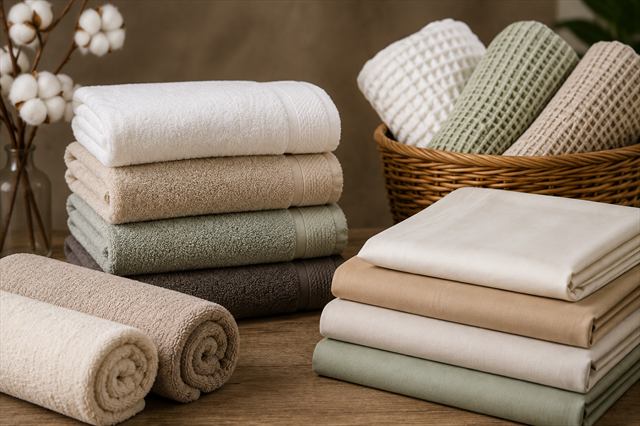
Step 6: Towels, Bed Linen and Home Textiles
Consumer textiles must meet the Textile Labelling and Advertising Regulations:
- Generic fibre names with percentages, in English and French.
- A dealer identity: a name and postal address, or a CA identification number issued by the Competition Bureau to Canadian dealers.
- Permanent labels on towels, sheets and pillowcases.
Bedding must also meet the Textile Flammability Regulations, and the Canada Consumer Product Safety Act places duties on importers, including keeping traceability records and reporting incidents.
Labels are much cheaper to apply in the factory than in a Canadian warehouse. Include the label wording, fibre content and CA number in your purchase specification; our hotel towel and bedsheet specification guide lists the other details to agree.
Step 7: Supply-Chain Due Diligence
Canada’s Customs Tariff prohibits goods produced wholly or in part by forced labour, from any country. Importers are expected to know their supply chain. Ask your supplier who produces the goods and how that can be evidenced, and keep the records. Our guide on how to verify an exporter in Pakistan covers supplier checks.
What Your Pakistani Supplier Should Provide
For a typical sea shipment, expect a commercial invoice, packing list and bill of lading, plus product-specific documents such as a phytosanitary certificate for rice or produce and, where GPT is claimed, the exporter’s origin statement. Our guide to export documents from Pakistan explains each one and who issues it.
Source Products for Canada with Bridge Global Trading
Bridge Global Trading (Pvt.) Ltd. works with international buyers sourcing rice, fresh produce and towels, bed linen and home textiles from Pakistan. Tell us your product, specification, quantity and Canadian destination, including any labelling or certificate requirements, and we will confirm what can be supplied and on what terms.
See our import and export services, or request an export quote for Canada.
Frequently Asked Questions
Do I need a customs broker to import from Pakistan to Canada?
No, the CBSA does not require you to use one. Many businesses do, because only a licensed customs broker can account for goods and pay duties on your behalf. The importer remains responsible for the duties and taxes, and you must delegate authority to your broker in the CARM Client Portal.
Does Pakistan get preferential tariff treatment in Canada?
Pakistan is eligible for Canada’s General Preferential Tariff (GPT) as well as the Most-Favoured-Nation rate. GPT excludes apparel, footwear, certain textiles and sensitive agricultural products, so check the Customs Tariff for your specific tariff item.
Is there duty on rice imported from Pakistan into Canada?
The 2026 Customs Tariff lists rice under headings 1006.10 to 1006.40 at a Most-Favoured-Nation rate of Free. GST still applies, and food import rules from the CFIA apply separately. Confirm the rate for your exact tariff item before you buy.
Do towels and bedsheets need special labels in Canada?
Yes. Consumer textiles need fibre content in English and French and a dealer identity (a name and postal address, or a CA identification number). Towels, sheets and pillowcases need permanent labels. Bedding must also meet Canada’s textile flammability requirements.
This article is general trade and sourcing information. Product availability, certifications, shipping arrangements and specific export capabilities are confirmed per enquiry before any transaction-specific commitment is made.